
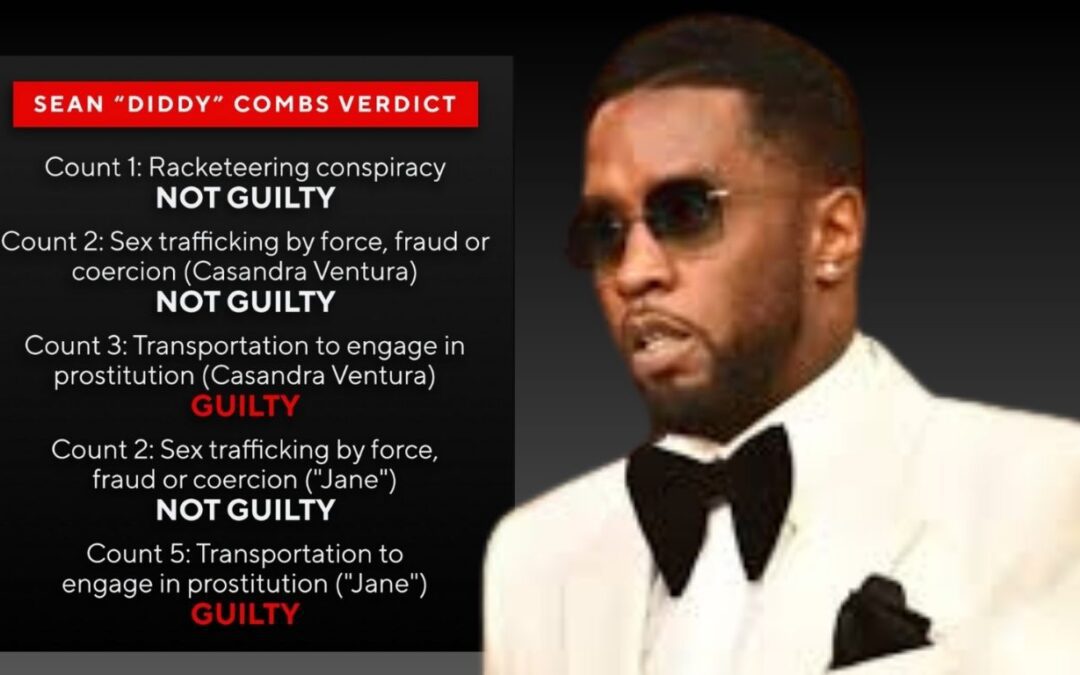
Sean “Diddy” Combs, also known as Sean Combs or Sean P. Diddy Combs, now faces the most serious consequences of his career. After years of allegations, a federal court convicted him of transporting women across state lines for prostitution, alongside accounts of domestic violence and abuse. He was sentenced to 50 months in prison (4 years and 2 months, which includes one year time served), marking a turning point in both his personal life and public image.
The case brought forward testimony from former partners and witnesses who described domestic violence, physical abuse, control, and drug-fueled encounters, which have become known as “Diddy Parties or Freak Offs”. Prosecutors argued that his actions went beyond the “lifestyle” often associated with celebrity culture, while the defense highlighted his struggles with addiction and trauma. The courtroom revealed not only the charges against him but also the lasting impact on those closest to him.
After several weeks of trial, Sean P. Diddy Combs finally spoke in court. Loren Lorosa of The Breakfast Club shared that Sean P. Diddy Combs stated he took ownership of his actions, including being the abuser in a domestic violence instance, “I apologize to all domestic violence victims….[admits he was sick, he fell and knew better]”. He diminished his self down to “just a man that got lost in [his] ego”. For many, I think this is no coincidence that Sean P. Diddy Combs’ court response and apology are presented in October, which is also Domestic Violence Awareness Month.
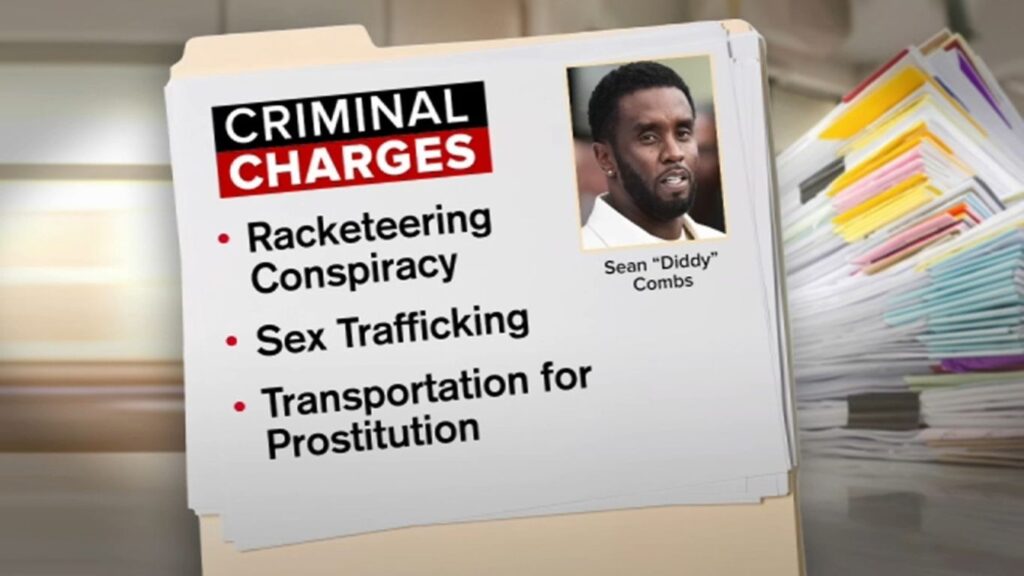
This verdict has sparked widespread discussion about accountability, power, and the influence of fame. The trial featured emotional testimony from family members, former partners, and public figures, including his long-term ex-girlfriend Cassie Ventura, making it one of the most closely watched legal battles in recent years.
Sean P. Diddy Combs’ Legal Charges
Sean P. Diddy Combs faced a series of accusations and federal charges that combined allegations of domestic violence with criminal conduct involving prostitution-related offenses. His trial and sentencing drew widespread attention because of the testimony from former partners, including his long-term ex-girlfriend Cassie Ventura, and the serious nature of the evidence presented in court.
Overview of Domestic Violence Allegations
Multiple women, including singer Cassie Ventura, accused Sean Combs of physical abuse and domestic violence during their relationships. Ventura described repeated incidents of violence that left her feeling controlled and unsafe.
Another woman, using the pseudonym Jane, testified that Combs assaulted her and forced her into unwanted sexual acts. Both women said the abuse caused long-term emotional harm, with Ventura and Jane admitting they had considered ending their lives due to the trauma.
The court heard evidence that Combs’s behavior went beyond isolated incidents. Accounts included violent outbursts, coercion, and degrading treatment. Federal prosecutors argued that these actions showed a pattern of domestic violence and abuse tied to his control over women in his personal life.
Details of the Federal Charges
Sean P. Diddy Combs was charged under the Mann Act, which prohibits transporting individuals across state lines for prostitution. The charges focused on events where he arranged travel for women to participate in sexual encounters with male escorts. These encounters were described in court as “freak-offs” or “Diddy Parties”.
Prosecutors also pursued charges of racketeering conspiracy and sex trafficking, alleging that Combs ran a broader criminal enterprise. They argued that the acts spanned two decades and involved systematic exploitation of women.
The government sought a sentence of more than 11 years, citing the seriousness of the conduct. However, the defense argued for a lighter term, presenting him as a rehabilitated figure who had used his time in custody to address addiction and help other inmates.
Key Evidence and Testimonies
Testimony from Cassie Ventura and Jane formed the center of the prosecution’s case. Both women described being pressured or coerced into sex with escorts while Combs directed or participated. Their accounts included descriptions of violence, humiliation, and manipulation.
The court also considered evidence of Combs’s domestic violence and physical abuse, including incidents where he assaulted Ventura and later assaulted Jane. These testimonies were supported by travel records and other documentation showing arrangements for the encounters.
Prosecutors highlighted that Combs’s wealth and influence allowed him to orchestrate these acts without accountability for years. The judge noted that his financial resources “enabled his crimes,” making the offenses more serious in scope and impact.
Acquittals and Convictions
The jury acquitted Combs of the most serious charges, including sex trafficking and racketeering conspiracy. These acquittals meant the government could not prove beyond a reasonable doubt that he managed a long-term criminal enterprise.
However, he was convicted on two counts of violating the Mann Act. The judge sentenced him to 50 months in prison (4 years and 2 months, which includes one year time served) and imposed a $500,000 fine, the maximum allowed.
Because he had already served one year in detention since his 2024 arrest, Combs is expected to remain incarcerated until late 2028. The court emphasized that the convictions reflected serious harm to the women involved and required real accountability.
The Trial and Sentencing of Sean Combs
Sean P. Diddy Combs faced federal charges tied to prostitution-related offenses that stemmed from arranging interstate travel for sexual encounters. The case drew attention due to testimony from former partners and the sharp divide between the government’s request for a lengthy prison term and the defense’s push for leniency.
Role of Judge Arun Subramanian
Judge Arun Subramanian presided over the case and delivered the final sentence. He emphasized that the offenses were serious violations of the Mann Act, which prohibits transporting people across state lines for prostitution.
In his remarks, the judge explained that Combs’s wealth and influence enabled his conduct. He rejected the defense’s argument that prior charitable work should outweigh the harm caused to the women involved.
Judge Subramanian also considered sentencing guidelines, which suggested a range of 70 to 87 months. He ultimately imposed a 50-month prison term, stating that it balanced accountability with fairness.
The judge highlighted testimony from Casandra Ventura and another former girlfriend, referencing how the abuse left lasting emotional scars. He stressed that the sentence should send a message about accountability for violence against women.
Sentencing Hearing and Verdict
The sentencing hearing included arguments from both prosecutors and defense attorneys. Prosecutors, led by Christy Slavik, asked for more than 11 years, arguing that Combs showed little remorse and continued to minimize his actions.
The government cited evidence of repeated abuse and exploitation, including testimony that Combs forced women into encounters with hired escorts. Prosecutors argued that his behavior was not casual but systematic.
The defense countered with a request for no more than 14 months. They argued that the split verdict from the trial showed the jury rejected the most serious charges, including sex trafficking and racketeering.
Judge Subramanian sentenced Combs to 50 months in prison and imposed a $500,000 fine. With credit for time served since his 2024 arrest, he could remain incarcerated until late 2028.
Statements from Defense Attorneys
Combs’s legal team presented him as a man who had changed during his time in detention. They pointed to his sobriety, mentoring of fellow inmates, and commitment to using his influence for positive work if released.
The defense also highlighted his philanthropic record, business career, and role as a father. They argued that his contributions to music and community programs demonstrated his ability to reform.
During the hearing, five attorneys spoke on his behalf. They insisted that a long sentence would not serve justice, given his acquittals on major charges. Instead, they urged the court to impose a shorter term that reflected the lesser counts.
Despite these arguments, the judge ruled that the seriousness of the offenses required a substantial penalty.
Impact on Sean Combs’ Family
Combs’s six adult children attended the sentencing and gave emotional statements. Several spoke through tears, asking the judge to show mercy so their family could heal together.
One daughter, D’Lila Combs, pleaded directly for her father’s release, describing his importance in their lives. The defense also played an 11-minute video showing Combs as a philanthropist and father, which moved him to tears in court.
Family members described his efforts to stay connected while in detention, including writing letters and offering encouragement. They portrayed him as a supportive presence despite his incarceration.
The emotional appeals underscored the personal toll of the case. While the judge acknowledged their pain, he maintained that accountability for the crimes outweighed the requests for leniency.
Key Individuals and Witnesses in the Case
The trial included testimony from former partners, friends, employees, and law enforcement officials. Their accounts described physical abuse, threats, and coercion, as well as the use of sex workers and male escorts in Sean Combs’ private life. Together, these testimonies provided the court with a detailed picture of the allegations.
Cassie Ventura’s Testimony
Cassie Ventura, Combs’ former partner, played a central role in the case. She testified that she experienced years of abuse, including physical assaults and threats. Her account described incidents where she was punched, dragged, and intimidated. This was supported by a leaked CNN video of Combs abusing Cassie Ventura in a hotel hallway and near the elevator as she tried to escape.
She also stated that Combs forced her into situations involving sex workers. Ventura’s testimony was supported by witnesses who said they saw her injuries, such as bruises, black eyes, and swollen lips.
Her mother, Regina Ventura, also testified. She recalled wiring Combs money after he threatened to release intimate recordings of her daughter. This reinforced the claim that Ventura was under constant pressure and fear of retaliation.
Ventura’s statements were considered some of the most powerful evidence because they combined first-hand experience with corroborating witnesses.
Testimonies of Other Victims
Several women besides Ventura testified about abuse by Combs. Former assistants and friends described being threatened, assaulted, or coerced. One former assistant, using the pseudonym “Mia,” said Combs sexually assaulted her and that she also witnessed him attack Ventura.
Other witnesses, such as makeup artist Mylah Morales, confirmed that Ventura often appeared with visible injuries. Dawn Richard, a former member of Combs’ music groups, said she personally saw Combs physically assault Ventura multiple times.
Some women testified about being forced into sexual encounters or threatened with financial harm if they refused. These accounts showed a broader pattern of behavior beyond Ventura’s individual experience.
The consistency across different testimonies strengthened the prosecution’s case and highlighted the scope of the alleged abuse.
Involvement of Male Sex Workers
The trial also revealed that Combs involved male sex workers in his private gatherings. Witnesses testified that he hired men to participate in sexual encounters with women, including Ventura.
One former stripper, Daniel Phillip, described an incident where he saw Combs dragging Ventura by her hair. Another witness, Sharay Hayes, stated that he was paid to have sex with Ventura.
These testimonies showed that Combs used male escorts not only for his own purposes but also to exert control over women in his circle. The accounts suggested that these arrangements were not consensual in the way they were presented, but instead part of a larger system of coercion.
The involvement of men in these situations demonstrated that the abuse extended beyond female victims and highlighted the complexity of the case.
Impact on Sean Combs’ Career and Reputation
Sean P. Diddy Combs, also known as Diddy, Puffy or P. Diddy built a career spanning music, fashion, television, and business. His conviction has damaged that image. Past honors, such as his BET Lifetime Achievement Award in 2022, now stand in contrast to the criminal findings against him.
Major partners have already distanced themselves. Companies once tied to his liquor ventures and fashion brand have avoided public association. Concerts, endorsements, and media appearances have slowed, reflecting the reputational cost of the federal prosecutors’ case.
Public perception has shifted from viewing him as a cultural mogul to someone associated with violence and abuse. Even though he was acquitted of racketeering and sex trafficking, the guilty verdicts carry enough weight to overshadow his past achievements.
Key Takeaways
- Sean P. Diddy Combs was sentenced to 50 months in prison on federal charges.
- Testimony highlighted domestic abuse, physical abuse, control, and the role of addiction.
- The case raised broader questions about power, accountability, and celebrity culture.
Frequently Asked Questions (FAQs)
Domestic violence cases raise legal, social, and personal issues that affect both the accused and the victims. Court decisions, sentencing outcomes, and public attention play a major role in shaping how these cases unfold.
What are the legal implications of domestic violence charges?
Domestic violence charges can lead to criminal penalties, including jail or prison time, fines, and probation. Courts may also issue restraining orders to protect victims. A conviction can affect employment, housing, and custody rights.
How does a verdict affect a public figure’s career?
A guilty verdict often damages public trust and professional opportunities. Endorsements, business partnerships, and media appearances may be withdrawn. Even an acquittal can carry reputational harm due to the publicity surrounding the case.
What are the typical legal proceedings following domestic violence allegations?
After an arrest, prosecutors review evidence to decide whether to file charges. If charges move forward, the case may involve an arraignment, hearings, and a trial. Victims may testify, and defense attorneys can challenge the evidence.
What support systems are available for victims of domestic violence?
Victims can access hotlines, shelters, and counseling services. Many states fund victim advocacy programs that provide legal help, safety planning, and emergency housing. Nonprofit organizations also connect survivors with community resources.
How does the legal system ensure a fair trial for high-profile individuals?
Judges may take steps to manage media coverage and jury selection. Courts can sequester jurors, restrict cameras, or issue gag orders to reduce outside influence. High-profile defendants still face the same burden of proof as anyone else.
What are the potential consequences of a domestic violence conviction?
A conviction can result in incarceration, probation, and mandatory counseling programs. Long-term effects may include loss of firearm rights, immigration consequences, and barriers to certain jobs. Repeat offenses often carry harsher penalties.
You May Also Like:

 Subscribe to my channel