Becoming a Human Resources Professional
Starting a Human Resources career can be a hard task. With over a decade of human resources experience, there have been several noticeable trends. These resources will help you learn about human resources, then use that knowledge to increase your confidence in the human resources career field, then start and eventually grow your Human Resources career.
Start Your HR Career with Confidence
I know that breaking into Human Resources can feel overwhelming.
Maybe you’ve applied to dozens of HR jobs without getting interviews. Maybe every job posting asks for experience you don’t have yet. Or maybe you’re trying to figure out which certification, course, or career path is actually worth your time and money.
If you’ve been wondering…
- How do I get into HR with little or no experience?
- Which HR jobs should I apply for first?
- Do I need a certification before I can get hired?
- How can I make my resume stand out?
- What should I learn first?
You’re in the right place.
I’ve spent more than a decade recruiting, hiring, coaching, and developing HR professionals, and I’ve seen the same mistakes keep talented people from landing interviews. That’s exactly why I created this page.
Instead of spending hours searching the internet for random advice, you’ll find the resources, training, and tools that will help you build your HR career step by step.
Everything You Need to Launch Your HR Career
Whether you’re a recent graduate, changing careers, or trying to land your very first HR position, these resources were selected to help you move from “I don’t know where to start” to confidently applying for HR roles.
On this page you’ll find resources to help you:
✔ Learn what Human Resources professionals actually do
✔ Understand the different HR career paths
✔ Build the skills employers are looking for
✔ Create a resume that gets noticed
✔ Prepare for HR interviews
✔ Earn certifications and professional development
✔ Gain confidence before your first HR job
✔ Continue growing after you get hired
Every resource has been chosen because it solves a specific problem HR professionals face at the beginning of their careers.
Your HR Career Doesn’t Have to Be Confusing
There isn’t just one way to get into Human Resources.
Some professionals start with recruiting. Others begin in administrative roles, payroll, customer service, operations, or another career entirely before transitioning into HR.
The key isn’t having the “perfect” background.
The key is understanding how to position your experience, build the right skills, and apply strategically.
That’s exactly what these resources will help you do.
Whether you’re looking for free learning opportunities, professional certifications, career mentoring, or in-depth training, you’ll find practical resources here to help you take your next step.
Your HR career starts today.
Start Here
If you’re brand new to HR, begin with this resource first. This is the mini-course to help you get your foot in the door.
Right now, you’re probably applying to jobs — a lot of them — but…
No one is calling you back.
You’re unsure if your resume is working.
You don’t even know what you’re qualified for.
You’re just hoping something will stick.
You’re tired of feeling stuck.
You’ve tried editing your resume… again… and again.
You want a career in corporate or HR, but you feel completely overlooked.

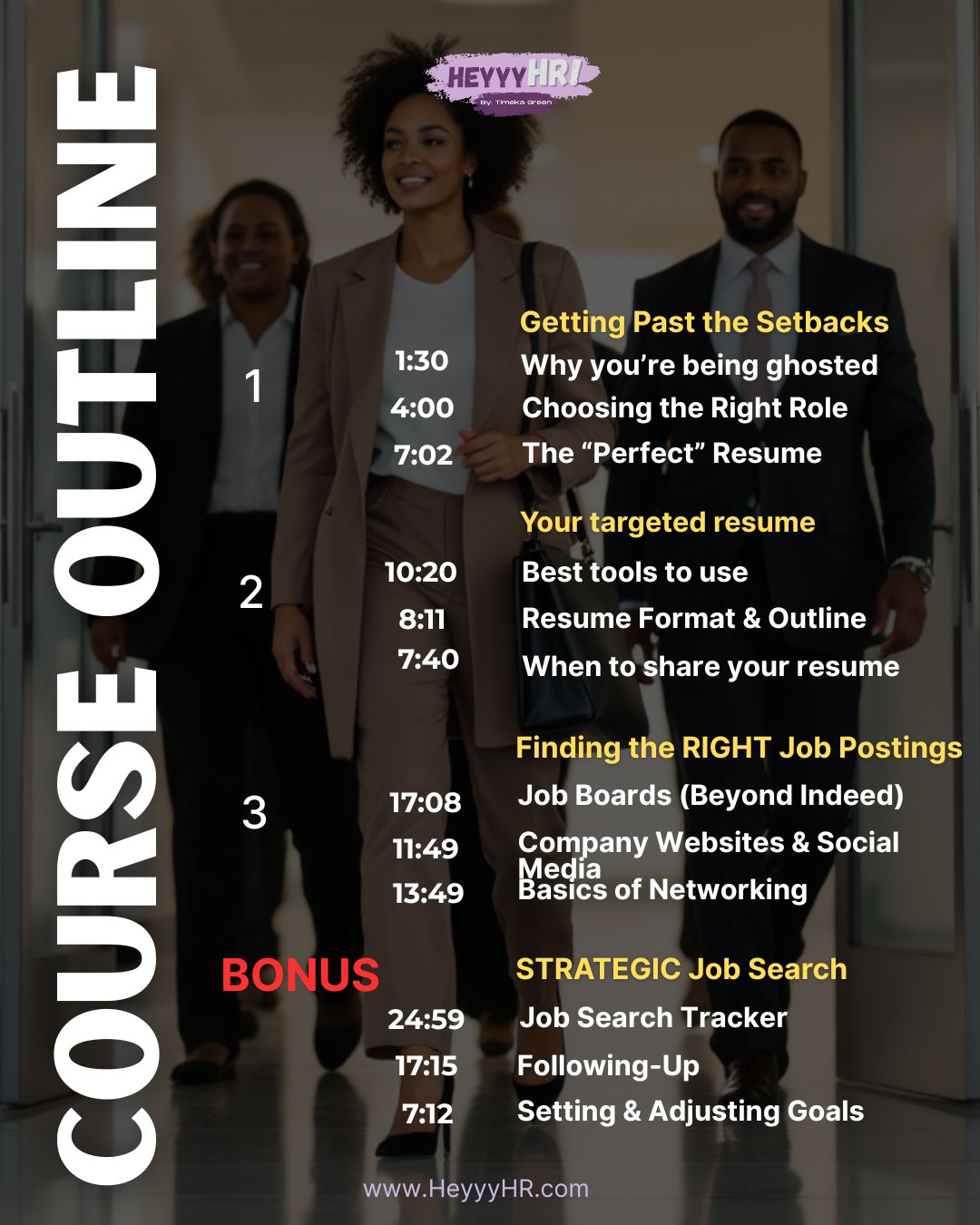
By the end of this course, you’ll be able to:
✔️ Identify the right roles (even with no experience)
✔️ Write a resume that works with the Applicant Tracking System
✔️ Showcase your skills in the language of the job market
✔️ Feel confident and clear in your job search
✔️ Build a career strategy — not just send out applications
Learn Human Resources
Build your HR knowledge with beginner-friendly courses and training.
Whether you’re starting your HR career from scratch or transitioning from another profession, building a strong foundation in Human Resources is one of the best investments you can make.
Understanding the core functions of HR—including recruiting, onboarding, employee relations, performance management, compliance, compensation and benefits, and professional development—will help you feel more confident as you apply for jobs and interview with employers.
The beginner-friendly courses and training resources below are designed to help you develop practical, job-ready skills while learning the terminology, processes, and best practices used by today’s HR professionals.
As your knowledge grows, you’ll be better prepared to stand out from other candidates, contribute quickly in your first HR role, and build a successful long-term career in Human Resources.
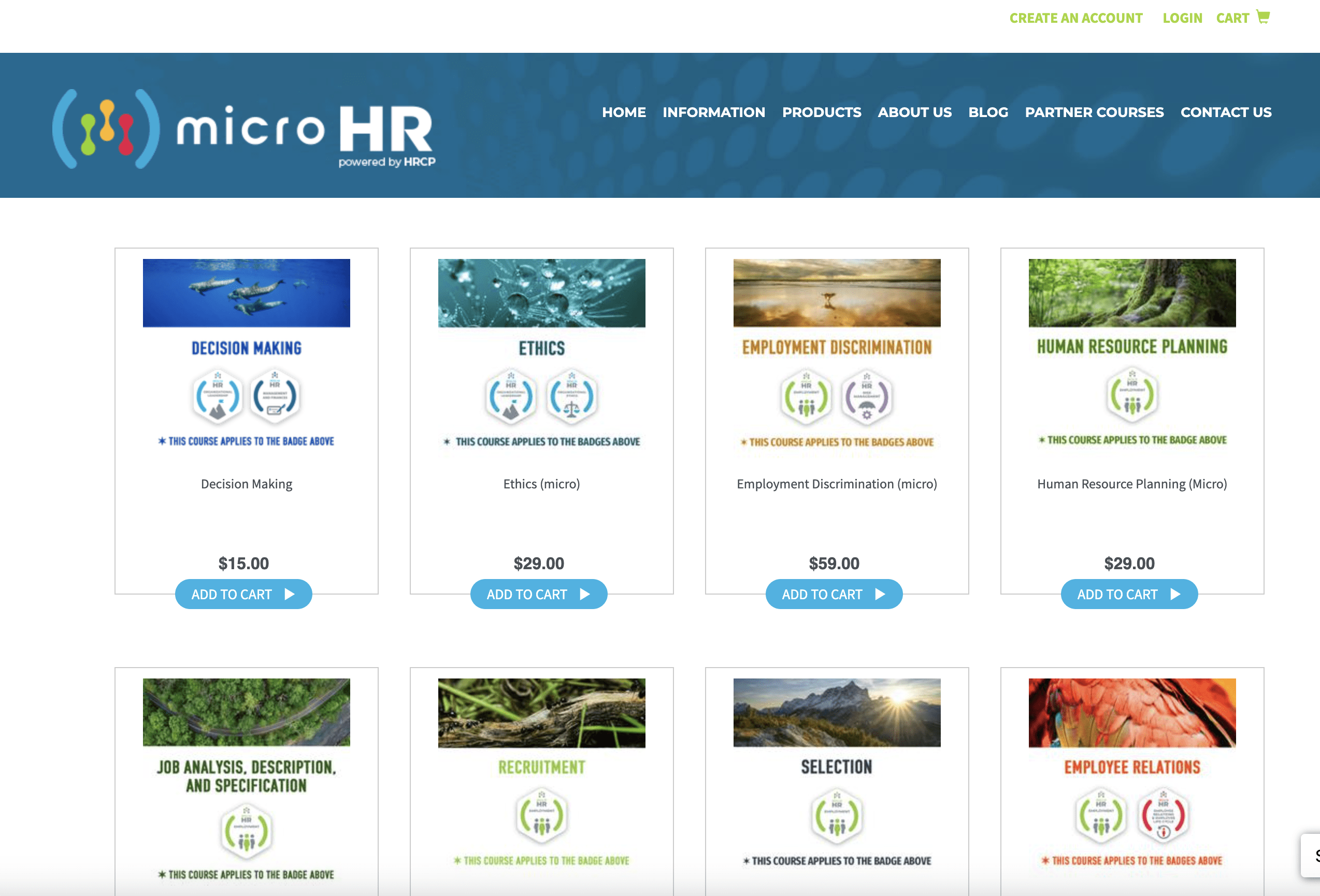
HRCP Mini-Courses
Starting a Human Resources career can be a hard task. With over a decade of human resources experience, there have been several noticeable trends. These resources will help you learn about human resources, then use that knowledge to increase your confidence in the human resources career field, then start and eventually grow your Human Resources career.
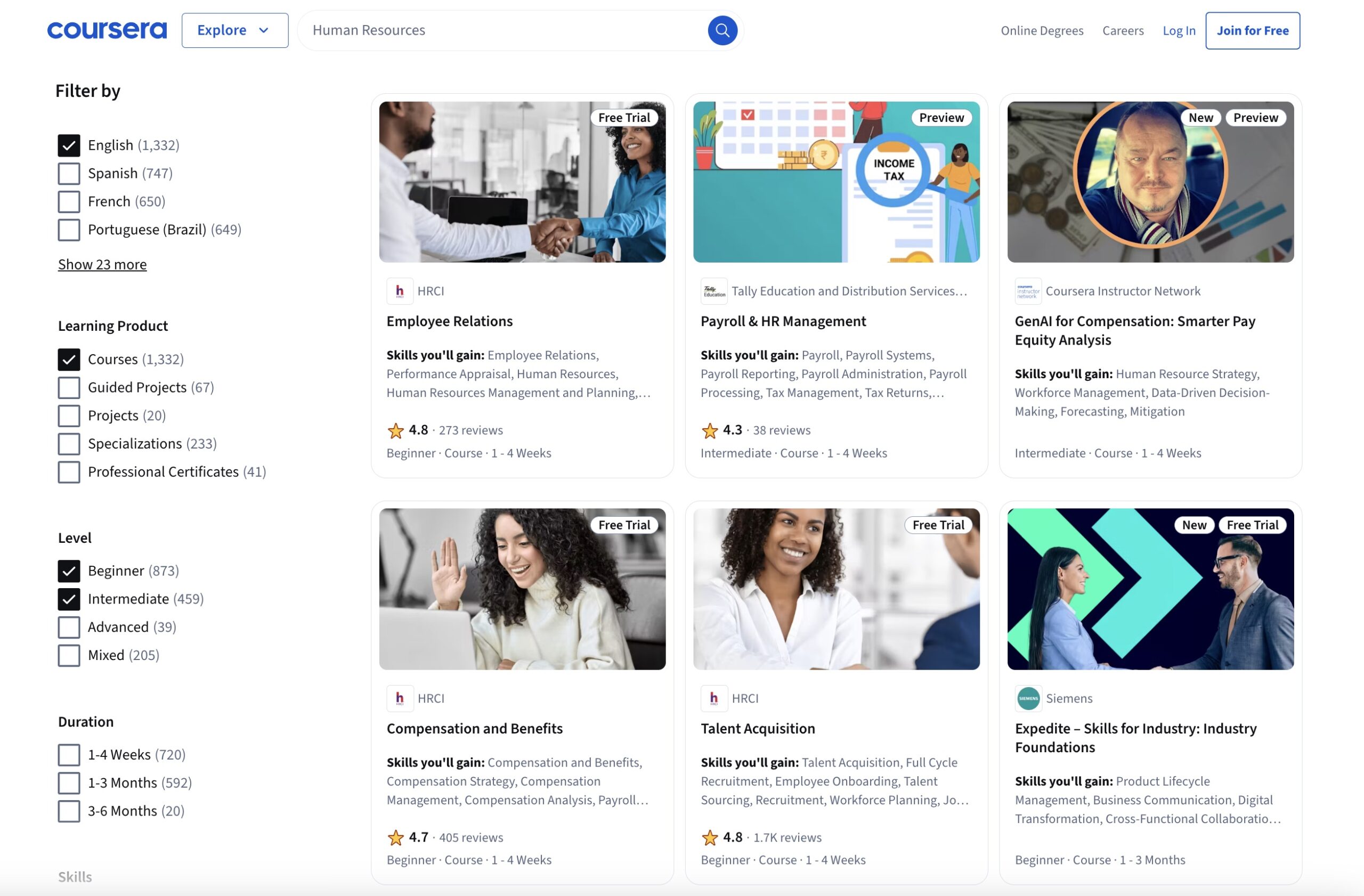
Coursera for HR Professionals
Starting your career in Human Resources comes with its challenges, and the first challenge is getting experience prior to getting hired on your first HR position. Coursera has created resources that will educate you about human resources, then start and grow your Human Resources career.
Click below to get prepared to start your HR career.
Course Careers
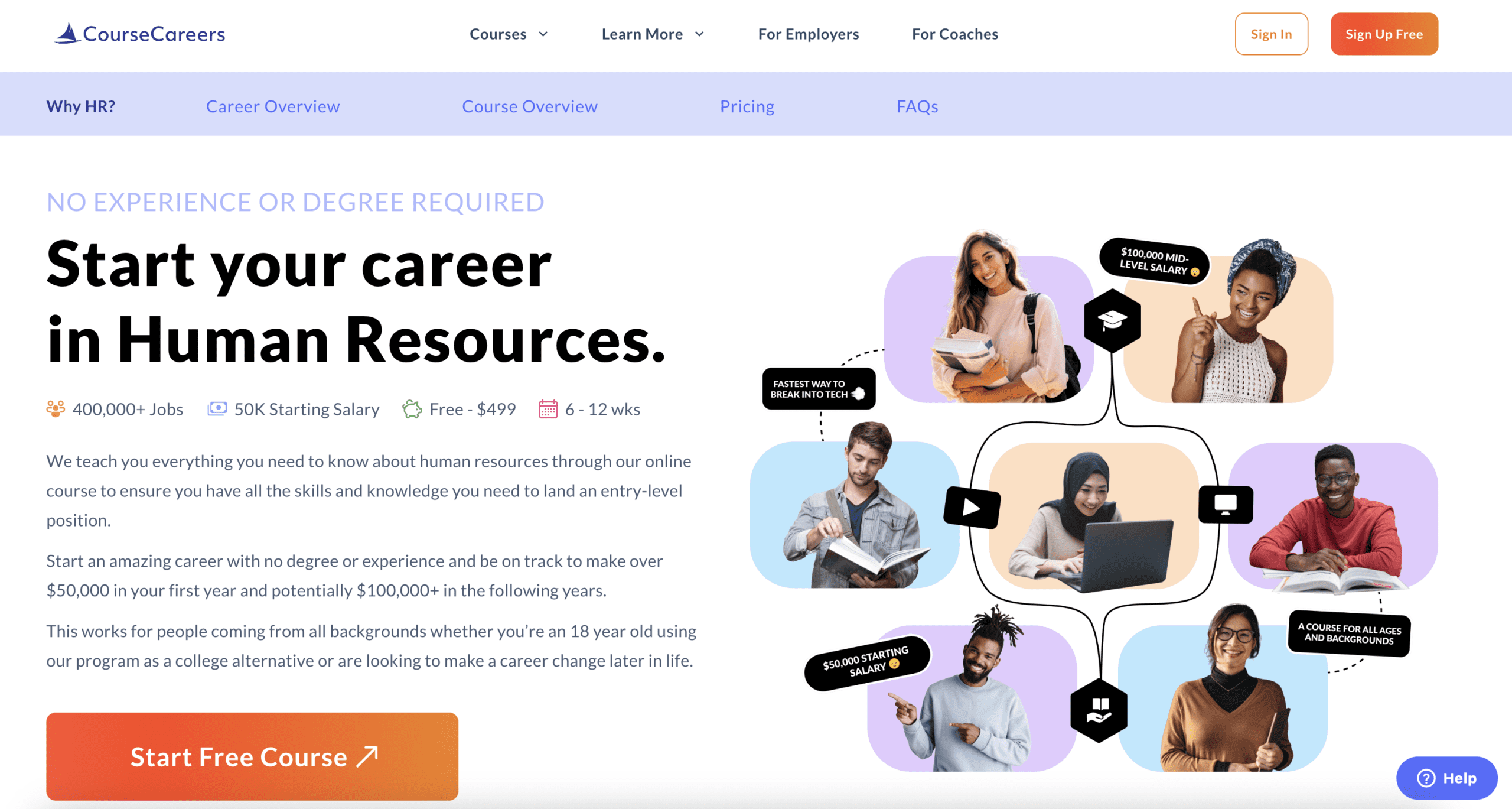
Starting a Human Resources career can be a hard task. With over a decade of human resources experience, there have been several noticeable trends. These resources will help you learn about human resources, then use that knowledge to increase your confidence in the human resources career field, then start and eventually grow your Human Resources career.
Click below to get started.
Build a Resume That Gets Interviews
Learn how to create a resume that gets through applicant tracking systems and grabs recruiters’ attention.
Your resume is often the first impression you make on a hiring manager—and in many cases, it determines whether you get an interview or an automated rejection. One of the biggest mistakes aspiring HR professionals make is using the same generic resume for every application.
Today’s employers rely on Applicant Tracking Systems (ATS) to screen resumes before a recruiter ever sees them, which means your resume needs to be tailored, keyword-rich, and strategically written to match the position you’re targeting.
Whether you’re entering Human Resources for the first time, changing careers, or trying to move into a higher-level HR role, your resume should clearly demonstrate the value you bring to an organization.
Employers aren’t just looking for a list of responsibilities—they want to see measurable accomplishments, transferable skills, and evidence that you can solve business problems.
A well-written resume helps tell that story and positions you as a strong candidate from the very beginning of the hiring process.
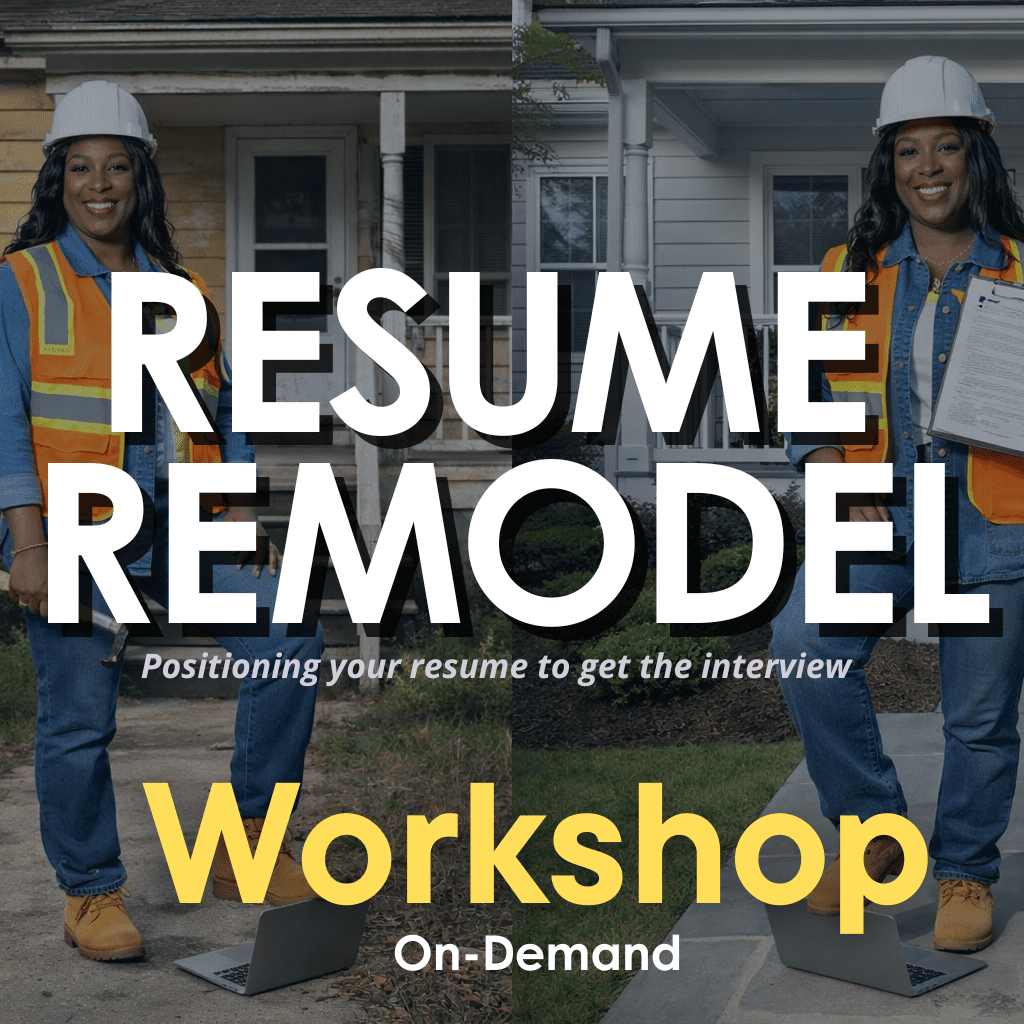
That’s exactly why I created the Resume Remodel Masterclass.
With more than 14 years of experience in recruiting, talent acquisition, and Human Resources, I walk you through the strategies I’ve used to evaluate thousands of resumes and identify candidates for interviews.
You’ll learn how to:
- optimize your resume for ATS
- tailor it for specific HR positions
- showcase your accomplishments with impact
- avoid the common mistakes that cause qualified candidates to be overlooked.
If you’re serious about landing interviews and accelerating your HR career, this masterclass will give you the practical tools and confidence to create a resume that gets results.
Earn Professional Credentials
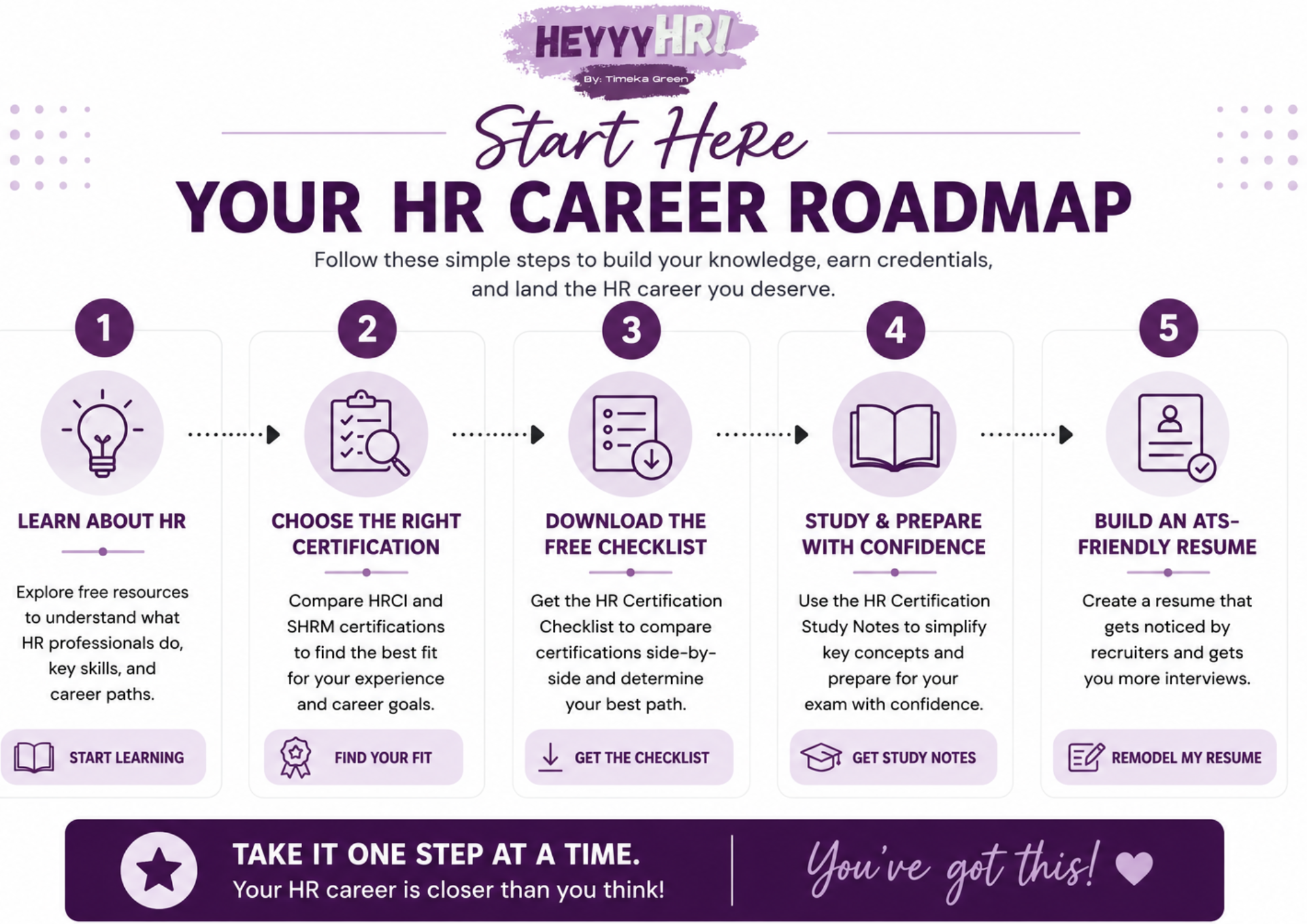
The certifications that can help your HR career stand out can be obtained from HRCI and SHRM.
Earning an HR certification is one of the best ways to demonstrate your knowledge, strengthen your credibility, and stand out in a competitive job market. While a certification isn’t required for every Human Resources position, many employers view it as evidence of your commitment to the profession and your ability to apply HR principles in the workplace.
If you’re planning a long-term career in HR, obtaining the right certification can help open doors to new opportunities and support your professional growth.
The two leading organizations that offer HR certifications are the Human Resource Certification Institute (HRCI) and the Society for Human Resource Management (SHRM).
If you’re just beginning your HR career or have little to no HR experience, the aPHR® (Associate Professional in Human Resources) from HRCI is designed specifically for early-career professionals. As you gain experience, the PHR® (Professional in Human Resources) focuses on operational and technical HR knowledge, while the SPHR® (Senior Professional in Human Resources) is intended for experienced HR leaders responsible for developing and executing organizational strategy.
SHRM offers two widely recognized certifications.
The SHRM Certified Professional (SHRM-CP) is designed for HR professionals who implement HR policies, support employees and managers, and contribute to day-to-day HR operations. The SHRM Senior Certified Professional (SHRM-SCP) is geared toward experienced HR leaders who develop people strategies, influence organizational decisions, and lead complex HR initiatives.
Not sure how to start studying?
Start with my free HR Certification Checklist, which compares the certifications, outlines eligibility requirements, and helps you determine the best fit based on your experience and career goals.
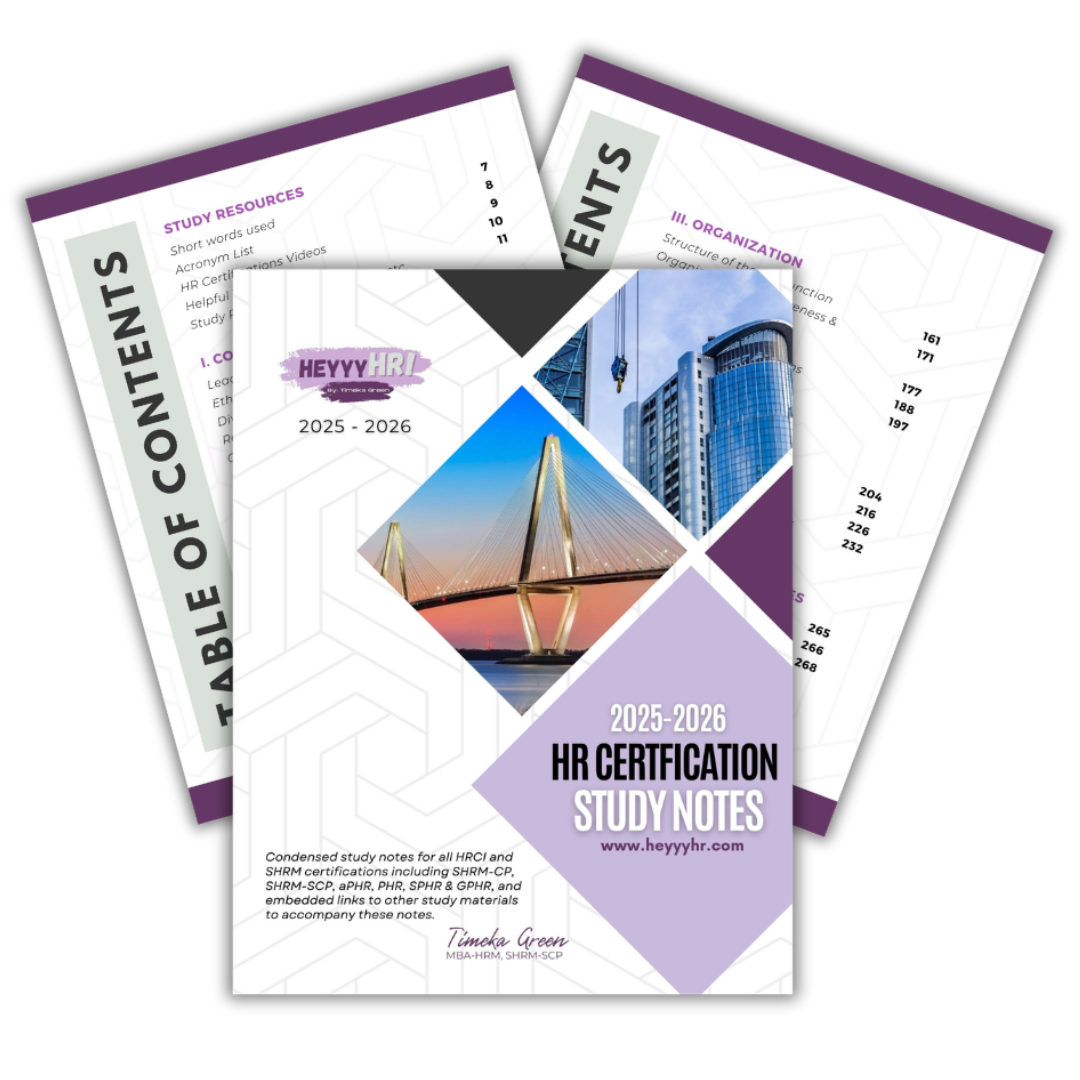
Once you’ve chosen your certification, continue with my HR Certification Study Notes, a comprehensive study resource designed to simplify key concepts, reinforce your learning, and help you prepare with confidence for exam day.
Once you’ve chosen your certification, continue with my HR Certification Study Notes, a comprehensive study resource designed to simplify key concepts, reinforce your learning, and help you prepare with confidence for exam day.
Continue Learning
Explore HR articles, career advice, and professional development resources.
Human Resources is an ever-evolving profession, and the most successful HR professionals are committed to continuous learning. From changes in employment laws and workplace trends to emerging technology and leadership strategies, staying informed can help you remain competitive and continue growing throughout your career.
Explore the articles, career advice, and professional development resources below to expand your knowledge, sharpen your skills, and stay up to date on the latest developments in the HR industry.
Career Mentoring 101: Why it’s a game-changer for your career
Career mentoring can be a game-changer for your professional growth. Mentoring in itself is a very powerful tool, so having mentors in multiple aspects of your life can really elevate your quality of life. A career mentor is an experienced advisor who guides and...

Human Resources Manager
A human resources manager (HR Manager) plays a crucial role in shaping an organization's workforce. The main duties of a Human Resources Manager include managing the team that recruits new talent, developing company policies, and ensuring that employees are...
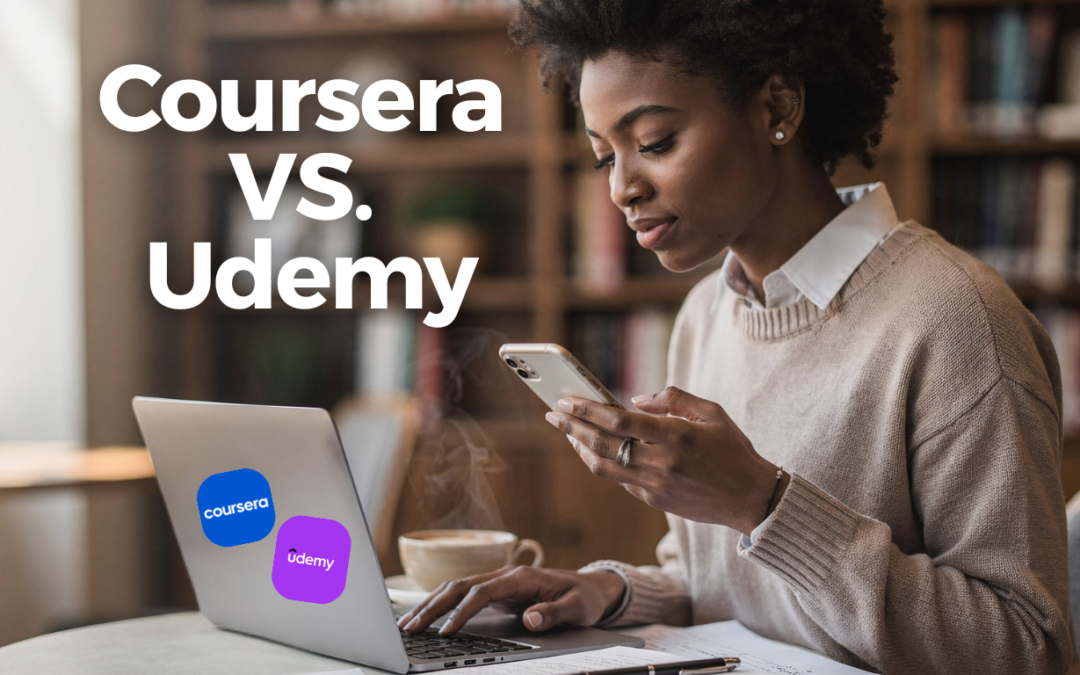
Coursera vs Udemy
Compare Coursera vs Udemy, and you'll see that both provide very flexible options to learn new skills, learn on the go, and to become a better professional. Coursera and Udemy were once competitors in the online learning space, but that changed in early 2026. The two...