
September marks Suicide Prevention Awareness Month, a time dedicated to breaking stigma and encouraging open conversations about mental health. You can play a vital role in suicide prevention by learning the warning signs, knowing how to respond, and sharing resources that provide immediate help. Simple actions, like listening without judgment or guiding someone toward professional support, can make a real difference.
If you are struggling with suicidal thoughts or suicidal tendencies, use the resources in this blog post to get help immediately. I know the cliche “you are not alone” is not always enough to adjust your thoughts and pain. I’ve been there. Without her knowing or me realizing it at the time, my daughter motivated me to continue living.
Since I lost my father to prostate cancer when I was 9 years old, I knew firsthand what it’s like to live without a parent. The decades of pain were too much for me to force onto her. I loved her far too much to watch her live her life crying every milestone, holiday, and birthday like I did (and sometimes still do). Surround yourself with loved ones (friends and/or family) who genuinely care and will always have your back – this is not the time to be embarrassed or think for a second that you’re weird or crazy. Life is hard and everyday life keeps lifing, so this is the time to separate real from fake friends.

When you understand suicidal tendencies and the signals that often come before a crisis, you are better prepared to step in with care and support. Suicide is a serious public health issue, but it is also preventable.
National efforts such as World Suicide Prevention Day and Suicide Prevention Awareness Month highlight the importance of awareness, education, and access to help. Plus, they provide tons of continuous resources that are available for all demographics, ages, and stages of suicide.
If you or someone you know is in immediate crisis, calling a suicide hotline connects you to trained professionals who can provide urgent support. Beyond crisis response, promoting mental health and building strong connections in daily life are key steps in long-term prevention.
Getting guidance through mental health challenges is the first step, and I can’t lie – Better Help has been the best mental health resource for me.
Understanding Suicide Prevention
Suicide prevention involves recognizing warning signs, reducing stigma, and ensuring access to help. It also means learning how to respond when someone expresses suicidal thoughts and understanding the role of education and awareness in saving lives.
For victims of suicidal thoughts or suicidal tendencies, getting professional guidance from someone who is neutral to your situation is a game-changer. It helps us sort through thoughts until we get to the root cause. It’s so much easier to create a plan after you know what the issue is.
Defining Suicide Prevention
Suicide prevention is the effort to reduce suicide risk through awareness, support, and timely intervention. It includes strategies like open conversations, access to mental health care, and crisis lines such as the 988 Suicide & Crisis Lifeline.
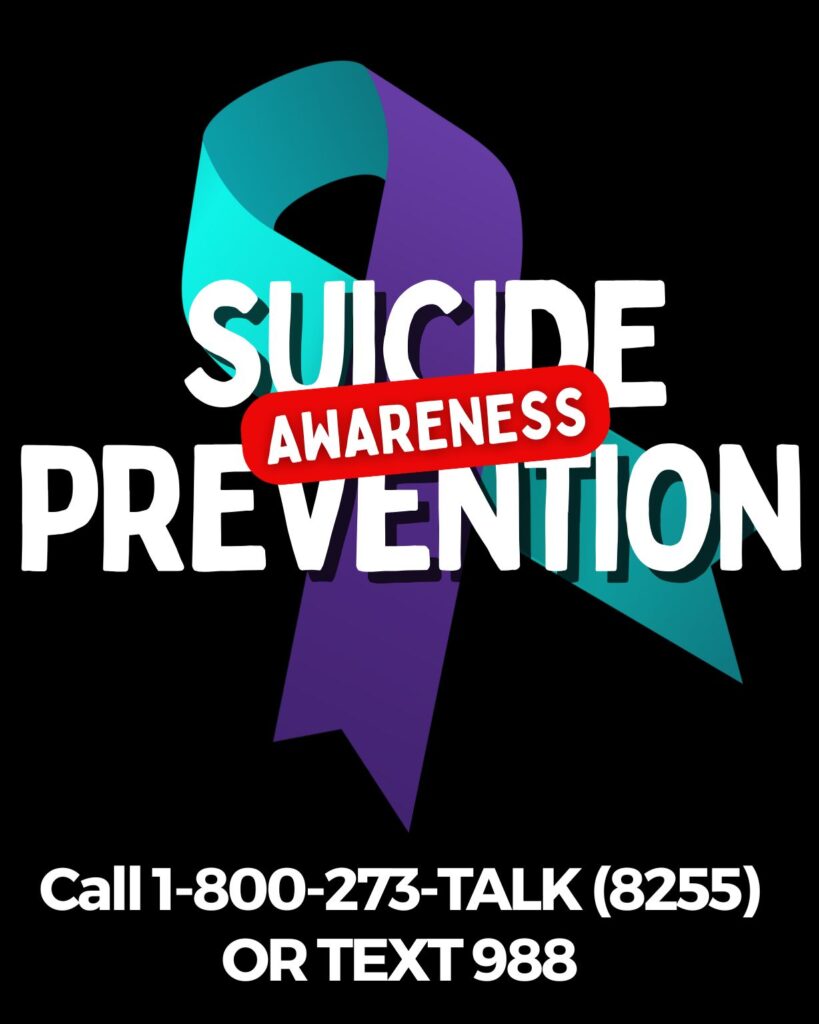
You can play a role by noticing changes in behavior, listening without judgment, and encouraging professional help. Prevention also involves community programs, school initiatives, and workplace resources that promote mental health.
Key elements of suicide prevention include:
- Early identification of warning signs
- Crisis intervention through hotlines and emergency services
- Ongoing support from family, peers, and professionals
By learning these steps, you can help create an environment where people feel safe to seek help.
The Importance of Suicide Prevention Awareness Month
Each September, organizations highlight Suicide Prevention Awareness Month to educate communities and encourage open discussion. Groups like the National Alliance on Mental Illness (NAMI) use this time to share resources, promote the 988 hotline, and reduce stigma.
Awareness campaigns remind you that suicidal thoughts can affect anyone, regardless of age, gender, economic status, or background. They also help normalize conversations about mental health, making it easier for people to ask for help.
During this month, you may see events, workshops, and social media campaigns that provide tools for recognizing warning signs. These efforts give families and communities practical ways to respond when someone is struggling. Though many do not realize it, responding appropriately can be the difference between life and death.
Common Myths and Facts
Misunderstandings about suicide can prevent people from getting the help they need. One common myth is that talking about suicide encourages it. In reality, asking someone directly about suicidal thoughts can reduce risk by showing care and concern.
Another myth is that only people with a diagnosed mental illness consider suicide. While mental illness increases risk, stressful life events, trauma, or isolation can also contribute.
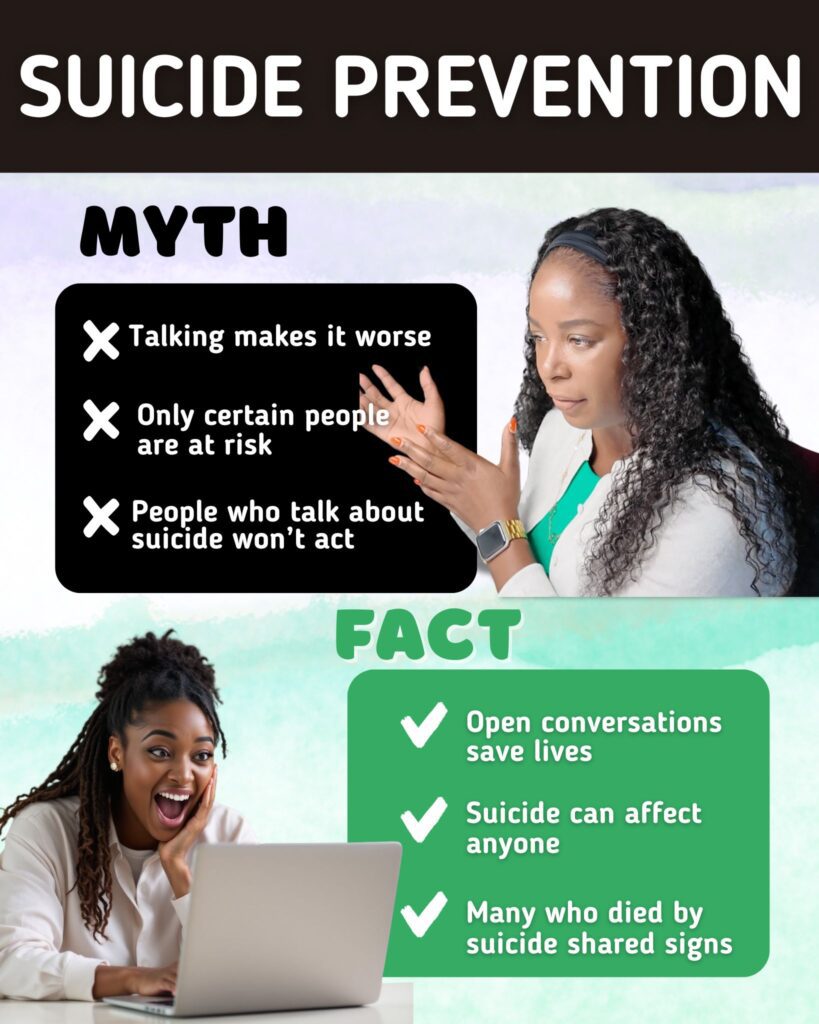
By separating myths from facts, you can better support those in need and encourage healthier conversations.
Recognizing Suicidal Tendencies and Warning Signs
You can better support someone at risk of suicide by learning how to identify suicidal thoughts, notice warning signs, and understand which groups may be more vulnerable. Paying attention to these details allows you to respond early and guide someone toward proper help.
Identifying Suicidal Thoughts and Behaviors
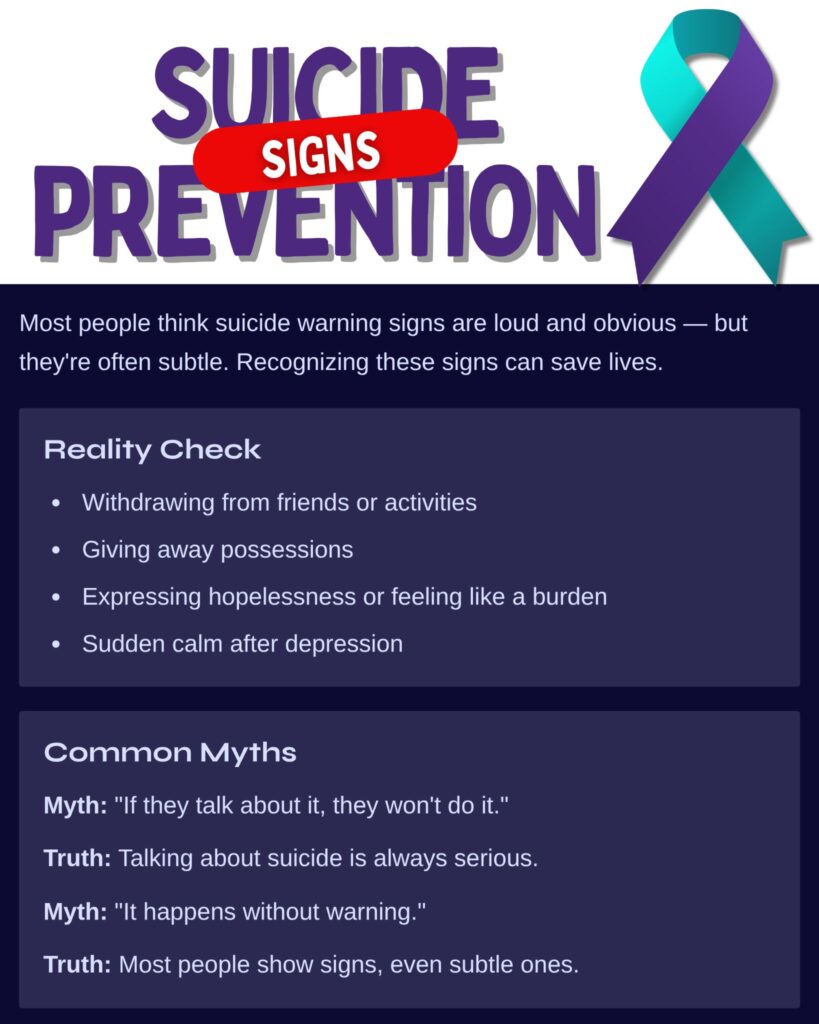
Suicidal thoughts can be expressed directly, such as someone saying they want to die, or indirectly, through vague statements about hopelessness. You may also notice behaviors that suggest planning, like researching suicide methods or giving away personal belongings (particularly items with sentimental value).
Some people withdraw from friends and family, stop engaging in activities they once enjoyed, or show sudden changes in mood. These changes may seem small at first, but they can signal a deeper struggle.
It is important to take all talk of suicide seriously. Even if someone appears calm after expressing suicidal thoughts, the risk may still be present. Listening without judgment and encouraging them to seek help can make a difference.
Key Warning Signs to Watch For
Warning signs often appear in patterns.
Common signals include:
- Talking about feeling trapped or like a burden
- Increased use of alcohol or drugs
- Extreme mood swings
- Sleeping too much or too little
- Withdrawing from social contact
You may also notice sudden calmness after a period of distress. This can indicate the person has made a decision about suicide.
According to mental health experts, recognizing signs early can help prevent suicide. For example, knowing warning signs like isolation, hopelessness, or reckless behavior gives you the chance to step in and provide support.
Risk Factors and Vulnerable Groups
Certain factors increase suicide risk. A history of depression, substance abuse, or previous attempts raises the likelihood. Stressful events like job loss, financial struggles, or relationship problems can also contribute.
Young people, especially college students, face unique challenges. For example, about 14% of students report struggling with suicidal thoughts, highlighting a need for awareness on campuses.
Other vulnerable groups include individuals with chronic illness, military veterans, and people with autism who may face higher rates of suicidal behavior. Recognizing these risk factors helps you understand who may need closer attention and support.
How to Respond and Support Someone at Risk
When someone shows signs of suicidal thoughts, your response can make a difference. Approach the situation with calm, patience, and respect while also knowing when to connect them with professional help or crisis services.
Starting the Conversation
Begin by noticing changes in behavior, mood, or daily habits. If someone seems withdrawn, expresses hopelessness, or talks about feeling like a burden, these may be warning signs. Do not wait for them to bring it up—take the first step.
Use simple, direct language. Asking “Are you thinking about suicide?” will not put the idea in their head. In fact, research shows that talking openly can reduce risk and encourage honesty.
When you start the conversation, focus on listening. Give your full attention and avoid distractions. Do not interrupt, rush, or try to “fix” the situation right away. Instead, show empathy through statements like “I’m here for you” or “You are not alone.”
Practical opening lines include:
- “I’ve noticed you haven’t been yourself lately. How are you doing?”
- “You seem really down. Do you want to talk about what’s going on?”
- “I care about you and want to understand what you’re going through.”
These approaches create space for the person to share without judgment.
Providing Immediate Support
If someone admits to having suicidal thoughts, take them seriously. Do not dismiss their feelings or suggest they “cheer up.” Acknowledge their pain and remind them that help is available.
Stay calm and avoid making promises you cannot keep. Instead, focus on connecting them with professional support. Encourage them to call the 988 Suicide & Crisis Lifeline, which offers free and confidential help 24/7. For additional support, Better Help offers individual sessions, group sessions, and classes.
If you believe they are in immediate danger, do not leave them alone. Call emergency services or a crisis hotline right away!
Your role is not to solve every problem but to keep them safe until trained help is available.
You can also share local resources, such as Parkview Behavioral Health services, which provide crisis teams, support groups, and training for families.
Reducing Stigma and Encouraging Openness
Stigma often prevents people from seeking help. Many fear being judged, misunderstood, or treated differently if they admit to struggling with their mental health. You can help reduce this barrier by speaking openly and respectfully about suicide.
Avoid minimizing their experience with phrases like “others have it worse” or “just think positive.” These responses can shut down communication and increase feelings of isolation. Instead, validate their emotions and remind them that asking for help is a sign of strength.
Encourage ongoing conversations about mental health in your family, workplace, or community. Campaigns like Seize the Awkward provide practical tools for talking about difficult topics.
By normalizing these discussions, you make it easier for people to reach out before they reach a crisis point. Small steps, like checking in regularly and showing consistent care, can build trust and help prevent suicide.

Crisis Resources and Suicide Hotlines
You have access to several reliable crisis services that provide immediate help, guidance, and follow-up care. These services connect you with trained counselors who listen, assess risk, and guide you toward safety and support.
988 Suicide & Crisis Lifeline
The 988 Suicide & Crisis Lifeline is a nationwide number you can call or text when you feel overwhelmed or unsafe. By calling or texting 988, you are connected to trained crisis counselors who are available 24/7.
This lifeline is free and confidential. It is designed to provide immediate help for people experiencing suicidal thoughts, emotional distress, or substance use crisis.
The service is part of a larger system that also includes regional crisis centers and mobile crisis teams, such as those highlighted in Alabama’s Crisis System of Care. These teams bring services closer to the community, making it easier to get help when needed.
You can also use the lifeline if you are worried about someone else. Counselors can guide you through safe ways to support a friend or family member in crisis.
Accessing 988lifeline.org
The website 988lifeline.org offers more than a phone connection. It provides resources that explain warning signs, risk factors, and steps you can take to support yourself or others.
You can find chat services on the site if you prefer typing instead of speaking. The chat connects you to the same trained counselors available on the phone line.
The site also includes guides for specific groups, such as veterans, youth, and LGBTQ+ individuals, who may face unique challenges. These tailored resources help you find information that feels relevant to your situation.
If you want to prepare before a crisis, the site provides safety planning tools. These tools let you list coping strategies, supportive contacts, and steps to take during a difficult moment.
Other National and Local Hotlines
In addition to 988, several other hotlines offer specialized support, such as:
- Veterans Crisis Line: Call 988 and press 1, or visit the VA’s suicide prevention page.
- Crisis Text Line: Text HOME to 741741 to connect with a counselor by text.
- Local hotlines: Many counties and states host their own lines, such as those promoted during Suicide Prevention Month in New York.
Local services often provide in-person support, including crisis centers or town hall meetings where you can learn about suicide prevention strategies. These options may also connect you to training programs like Applied Suicide Intervention Skills Training (ASIST).
Having multiple hotline numbers means you can choose the service that best matches your needs, whether that is immediate crisis help, veteran-specific care, or text-based support.
Promoting Mental Health and Long-Term Prevention
You can lower suicide risk by focusing on protective factors, strengthening support systems, and using tools that encourage safe and responsible communication. Each of these areas plays a role in building resilience and reducing the chances of a crisis.
Building Protective Factors
Protective factors are conditions that help reduce the likelihood of suicide. These include strong coping skills, healthy relationships, and access to mental health care. You can build these by encouraging open conversations about stress, practicing problem-solving, and promoting daily routines that support well-being.
Better Help offers unlimited classes that take you on a deeper dive into understanding mental health factors, coping skills, and how to move past the negative time period that made suicide seem like an option.
Practical steps include:
- Regular sleep and exercise to stabilize mood
- Limiting alcohol and drug use to reduce impulsive behavior
- Seeking counseling or therapy when stress becomes overwhelming
Protective factors also grow when you feel connected to school, work, or community. Programs that teach social-emotional skills and stress management can reduce long-term suicide risk. When you focus on prevention before a crisis, you create stronger buffers against future challenges.
Community and Family Involvement
Family and community support are critical in suicide prevention. When you check in with loved ones and listen without judgment, you help reduce feelings of isolation. Schools, workplaces, and faith-based groups can also provide safe spaces for people to share concerns.
You can strengthen support by:
- Asking directly if someone is thinking about suicide
- Encouraging professional help when warning signs appear
- Removing access to lethal means such as firearms or large amounts of medication
Events during Suicide Prevention Month often highlight how community involvement reduces stigma and promotes awareness. When families and communities act together, people are more likely to reach out for help before a crisis escalates.
Leveraging Technology Responsibly
Technology can support mental health when used carefully. Crisis hotlines such as the 988 Suicide & Crisis Lifeline provide immediate access to trained counselors. Apps like SafeUT allow students, parents, and first responders to connect with licensed professionals anytime.
At the same time, you should set boundaries around technology use. Social media can sometimes increase stress or isolation, especially for teens. Encourage balanced use by limiting screen time, curating positive content, and promoting in-person connections.
Some people also turn to chats and online forums for support. While these tools can provide comfort, they should not replace professional care. Using technology responsibly means combining digital resources with trusted personal and medical support systems.
Key Takeaways
- Suicide prevention starts with awareness and understanding of warning signs
- Support and connection can reduce risk and encourage hope
- Crisis hotlines and mental health resources provide immediate help
Frequently Asked Questions
You can better understand suicide prevention by learning how to recognize warning signs, knowing what resources exist, and exploring ways to support others. Awareness efforts also include community events, symbolic ribbons, and school-based programs designed to reach young people.
How can someone recognize the signs of suicidal tendencies?
You may notice changes in mood, behavior, or daily habits. Common signs include withdrawal from social activities, talking about hopelessness, giving away possessions, or a sudden shift in sleep or eating patterns. Paying attention to these changes can help you identify when someone may need support.
What resources are available for individuals struggling with suicidal thoughts?
If you or someone you know is in crisis, you can call, text, or chat 988 for immediate and confidential support. The 988 Suicide & Crisis Lifeline connects you with trained counselors 24/7. Local mental health organizations and primary care providers can also guide you to ongoing treatment and support.
What activities are typically organized during Suicide Prevention Month?
In September, groups like NAMI host awareness campaigns, educational events, and community walks to encourage open conversations about mental health. Many organizations also share resources about recognizing warning signs and promote the use of the 988 crisis line. These activities aim to reduce stigma and increase access to help.
How can one offer support to a friend or family member who may be suicidal?
Start by asking how they are doing and listen WITHOUT judgment and without trying to come to a quick resolution to the initiating event. Encourage them to talk about their feelings and let them know they are not alone. You can also help connect them to professional support, such as a counselor, doctor, or the 988 Lifeline.
What is the significance of the color or ribbon associated with suicide prevention awareness?
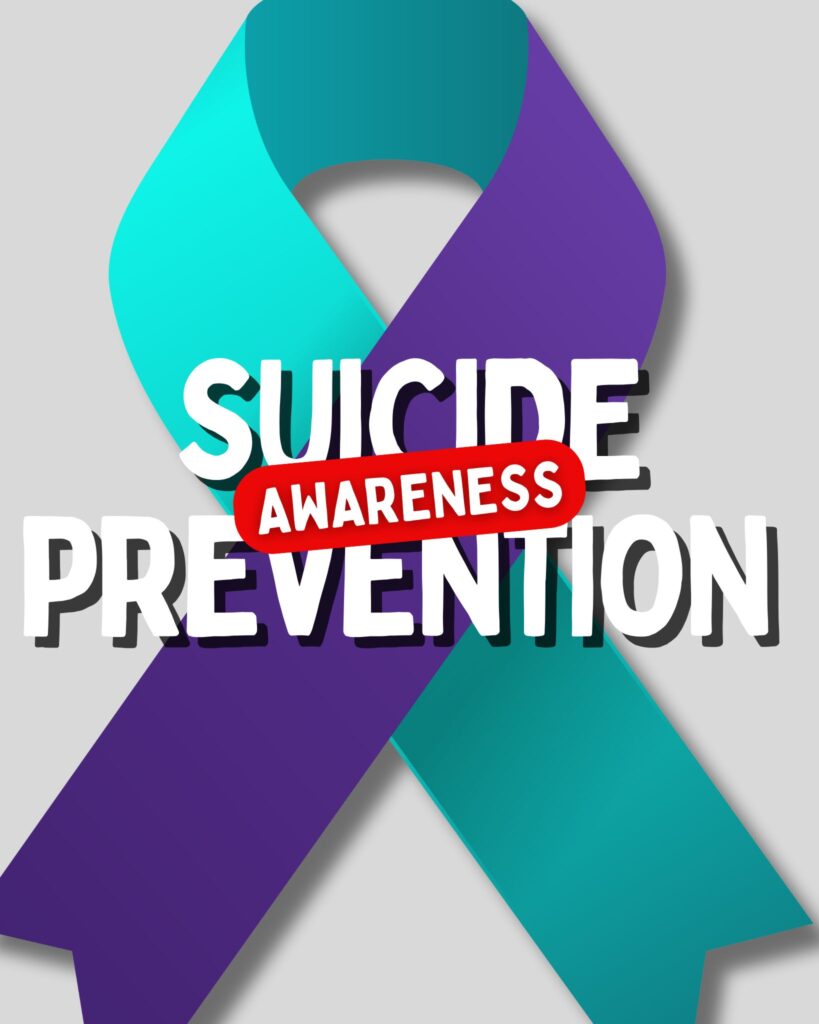
Suicide prevention awareness is often represented by a yellow ribbon or a teal and purple ribbon. These colors symbolize hope, remembrance, and support for those affected by suicide. Wearing or displaying these ribbons helps raise awareness and shows solidarity with prevention efforts.
What are the best practices for schools to implement during Teen Suicide Prevention Week?
Schools can provide age-appropriate education about mental health and warning signs of suicide. Training teachers, counselors, and staff to recognize risks and respond quickly is also important. Offering peer support programs and ensuring students know about resources like the 988 Lifeline can make a meaningful difference. Therapist Assist offers worksheets for teens and adults to process what they’ve learned, what they’re experiencing, and how to move forward.
You May Also Find These Helpful:
- Therapist Assist worksheets
- BetterHelp online counseling services
- How to cope with grief and mental health challenges in real time
- 988LifeLine

 Subscribe to my channel