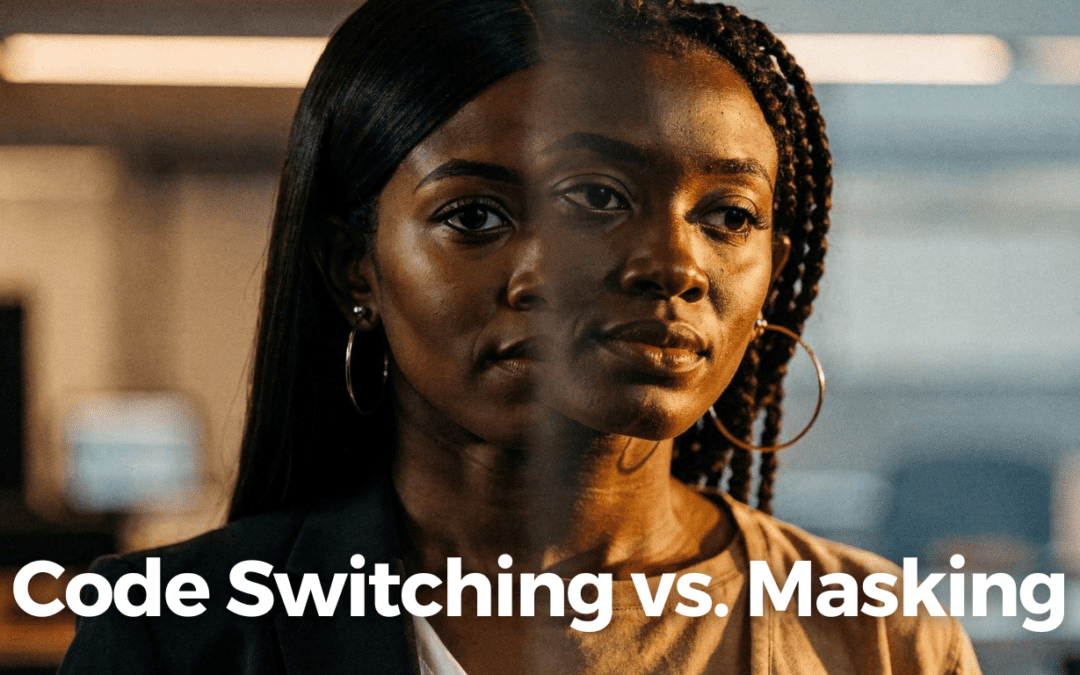
Many wonder to themselves, what does code-switching mean. Code-switching happens when people of color shift between their home dialect and Standard American English to fit in and protect themselves from judgment. Many people change how they talk, act, or present themselves depending on where they are and who they’re around. Many minorities, particularly black females, have become so annoyed with code-switching. This is mainly because they assume that code switching will improve “something”. Then, they notice that they still experience microaggressions, stereotypes, and disparities while tirelessly trying to adjust.
Since there is such a thin line between the two, some people may confuse code switching with masking. Masking involves hiding parts of your authentic identity to meet social expectations. Both practices are common survival strategies that many minorities use every day at work, school, and in public spaces.
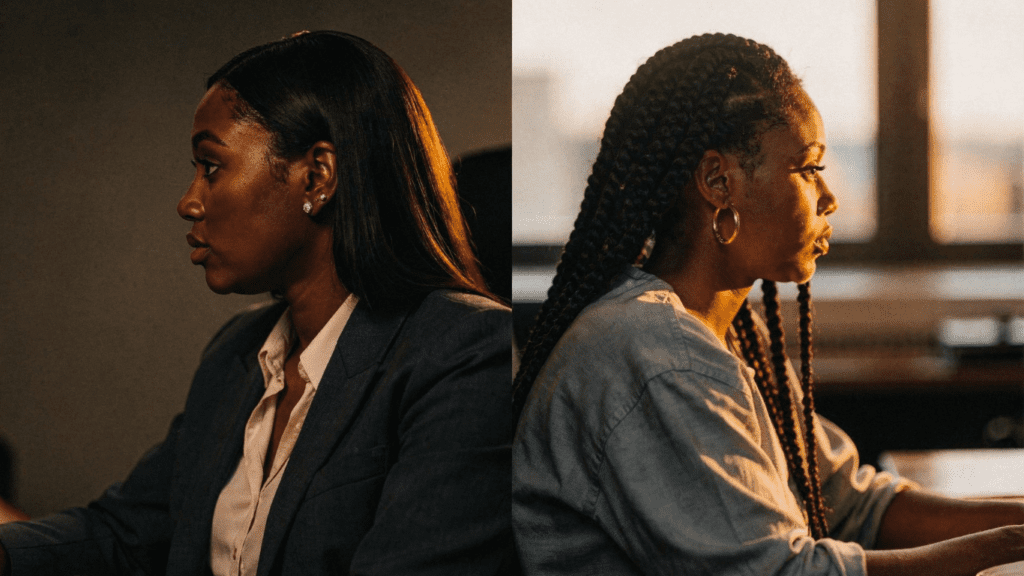
Double consciousness describes how you might view yourself through two different lenses at once—seeing yourself as you truly are while also seeing yourself through the eyes of the dominant culture. This split awareness can make you feel like you can never fully be yourself in certain spaces. The constant switching between different versions of yourself takes real energy and affects your mental health in ways that are often invisible to others.
Code-switching and masking might help you navigate predominantly white spaces more safely, but they come with hidden costs. The emotional labor of constantly monitoring how you speak and act can lead to stress, anxiety, loneliness, and burnout over time.
Understanding Code-Switching and Masking
Both code-switching and masking involve changing how you present yourself in different situations. These behaviors often emerge as responses to environments where you feel pressure to hide parts of your identity to gain acceptance or avoid negative treatment.
What Is Code-Switching?
Code-switching is adjusting your style of speech, appearance, behavior, and expression to optimize the comfort of others in exchange for fair treatment and opportunities. You might change how you speak, dress, or act depending on your environment.
Language switching represents one of the most common forms. If you speak African American Vernacular English (AAVE) at home but switch to Standard American English (SAE) at work, you’re code-switching. You might also adjust your tone, word choice, or even your topics of conversation. I want to share one of my personal code switching examples. Since I’m a southern woman from Charleston, South Carolina, where the Geechie dialect/language is the root of our history, I tend to avoid Geechie words, phrases, or dialect in the workplace and professional environments. When I’m with my friends and family, I naturally speak the Geechie language, use the dialect and common words and phrases that are derived from being Geechie.
The practice extends beyond language. You might change your hairstyle, clothing choices, or the interests you discuss. Black employees often downplay their race, avoid stereotypes, and promote shared interests with dominant groups to increase perceptions of professionalism.
What Is Masking?
Masking involves hiding or suppressing signs of your authentic self with the express purpose of blending in. Unlike code-switching, which focuses on adjusting to social contexts, masking typically refers to concealing aspects of your mental health or neurodivergent traits.
When you mask, you intentionally or unintentionally repress parts of your identity. You might hide your emotional responses, suppress natural movements, or force yourself to make eye contact when it feels uncomfortable.
Masking creates stress and anxiety because it requires constant monitoring of your behavior. The practice reflects a lack of inclusivity in environments where you don’t feel safe being yourself. As an African American license pyschologist, Kier Gaines does a perfect job of explaining the differences between code switching, masking, and double consciousness in his podcast called Learned the Hard Way.

Forms and Contexts of Masking
For LGBTQ+ individuals, masking involves subtle and not-so-subtle shifts in behavior, language, appearance, or emotional expression to maintain safety and acceptance. You might hide relationships, adjust mannerisms, or suppress natural expressions of gender identity.
Neurodivergent people frequently mask autistic traits or ADHD symptoms to appear neurotypical. You might force yourself to maintain conversations that exhaust you or hide stimming behaviors that help you regulate emotions.
Common masking behaviors include:
- Suppressing emotional reactions
- Forcing yourself into uncomfortable social interactions
- Hiding physical or verbal traits
- Pretending to understand social cues you find confusing
The Relationship Between Language and Identity
Your language connects directly to your cultural identity and sense of self. When you speak AAVE or African American English (AAE), you’re expressing cultural heritage and community belonging.
Switching from AAVE to Standard American English can feel like leaving part of yourself behind. You’re not just changing words—you’re adjusting how you express thoughts, emotions, and experiences.
Both masking and code-switching are exhausting tasks that create a direct byproduct of systemic lack of inclusivity. When you constantly adjust your authentic self, you experience mental fatigue and psychological costs that affect your well-being.
The Psychological Impact on Sense of Self and Belonging
Constantly switching between different versions of yourself creates deep questions about who you really are and where you fit in. This ongoing adaptation affects your mental health by creating internal conflict between your authentic self and the identities you perform in different spaces.
What Is Double Consciousness?
Double consciousness is the experience of viewing yourself through two different lenses at the same time. You see yourself as you are, but you also see yourself through the eyes of a dominant culture that may view you as different or less than.
This means you’re constantly aware of how others perceive you based on your race or identity. You might change how you speak, dress, or behave to match what you think others expect from you.
The concept explains why you might feel split between two identities. One identity reflects your true cultural background and values. The other reflects what you think you need to be to succeed or stay safe in mainstream spaces.
Double Consciousness and Its Historical Roots
W.E.B. Du Bois introduced double consciousness in his 1903 book “The Souls of Black Folk.” He described it as the experience of Black Americans who must navigate both their Black identity and how white society views them.
Du Bois wrote about the challenge of reconciling these two identities without losing yourself in the process. This internal struggle affects how you see your own worth and capabilities.
The concept still applies today because systemic racism continues to create environments where people of color must adapt to dominant white cultural norms. Your racial identity becomes something you must constantly manage rather than simply live.
Imposter Syndrome and Burnout
The constant adjustment of your identity creates feelings of not belonging anywhere fully. Imposter syndrome and self-doubt emerge when you consistently modify yourself to fit external expectations.
You might question whether your achievements are real or if you’re just good at performing the right version of yourself. This doubt grows when you suppress parts of your identity to be seen as professional or competent.
The emotional labor of maintaining different identities leads to burnout. Black/White multiracial students rely on chronic code-switching to seek acceptance and minimize exclusion, which takes a serious mental toll over time.
Navigating Authenticity and Belonging
Finding spaces where you can express your full self without judgment becomes essential for your mental health. Your sense of self strengthens when you don’t have to hide core parts of your identity.
Building authenticity means recognizing when adaptation serves your safety versus when it damages your well-being. You need to identify which spaces require code-switching for survival and which ones drain you unnecessarily.
Creating belonging involves finding communities where your natural way of speaking and being is accepted. This might mean seeking out cultural organizations, friend groups, or workplaces that value your whole identity.
You also need to challenge internalized beliefs about which parts of yourself are acceptable. The pressure to conform often comes from systems that have taught you your authentic self isn’t professional or worthy enough.
Mental Health Consequences for Minoritized Groups
The constant effort of adapting behavior and language across different social contexts creates measurable psychological strain. People from minoritized communities face distinct mental health challenges tied to navigating spaces where they experience bias, exclusion, and pressure to conform to dominant cultural norms.
Anxiety and Emotional Exhaustion
When you regularly code-switch or mask your authentic self, your brain stays in a heightened state of alert. This hypervigilance develops because you’re constantly monitoring how others perceive you and adjusting your behavior to avoid negative consequences.
People of color often mask to survive systemic racism and cultural exclusion in white-dominant spaces. You modify your language, behavior, and appearance to gain acceptance or safety. This ongoing adaptation drains your mental energy.
The emotional toll of code-switching is particularly heavy for BIPOC and LGBTQIA+ individuals who navigate predominantly white, cisgender, heterosexual environments. The mental health impact shows up as:
- Chronic anxiety from anticipating discrimination
- Emotional exhaustion from constant self-monitoring
- Sleep disruption linked to stress
- Difficulty relaxing even in safe spaces
Research shows that discrimination triggers feelings of being over-scrutinized, overlooked, and disrespected. These experiences violate your expectations of fairness and dignity. They can feel like direct attacks on your identity, making them especially harmful to your mental health.
Resilience, Self-Compassion, and Emotional Well-Being
Your emotional well-being depends partly on developing protective strategies that counter the stress of code-switching. Self-compassion plays a key role in this process. When you treat yourself with kindness during difficult moments, you build psychological resilience.
Resilience doesn’t mean the stress disappears. It means you develop tools to process and recover from harmful experiences. You might find support through:
- Cultural affirmation spaces where you don’t need to mask
- Therapy with culturally competent providers who understand your experiences
- Community connections with others who share similar challenges
Building resilience requires acknowledging that your need to code-switch stems from external pressures, not personal failure. You’re responding to real bias and discrimination in your environment. Self-compassion helps you separate the adaptive behavior from your core identity.
Your mental health benefits when you can access spaces where you feel fully accepted. These environments let you lower your guard and recover from the exhaustion of constant adaptation.
Academic and Workplace Settings for People of Color
Academic settings and workplaces often require intense code-switching from people of color. You may change how you speak, dress, or express ideas to fit institutional expectations shaped by white professional norms.
In these environments, you face microaggressions—brief, common exchanges that communicate hostile or derogatory messages. These incidents accumulate over time. A single comment about your hair, name, or communication style might seem small, but repeated experiences lead to burnout.
The workplace presents specific challenges. You might feel pressure to downplay your cultural identity to advance professionally. This creates what researchers call an “identity tax”—the psychological cost of suppressing parts of yourself to succeed.
An inclusive workplace recognizes these pressures and actively works to reduce them. But many environments still place the burden of adaptation entirely on you. Studies indicate that mental health disparities among minoritized groups connect directly to these unique stressors.
In academic settings, students of color often navigate predominantly white institutions where they feel isolated. You might question whether you belong or whether your achievements are valid. This doubt compounds the existing stress of code-switching and maintaining academic performance while managing discrimination.
Key Takeaways
- Code-switching and masking are protective strategies that require you to change your language or behavior to fit into dominant cultural spaces
- Double consciousness creates a mental split where you see yourself both as you are and through the judgmental lens of the dominant culture
- The constant effort of switching between identities drains your emotional energy and can lead to serious mental health effects, including anxiety, depression, and feelings of isolation
Frequently Asked Questions
Code-switching and masking create unique mental health challenges that affect stress levels, identity formation, and daily functioning. Understanding the differences between these behaviors and recognizing when they become harmful can help you protect your well-being.
How does code-switching affect stress, anxiety, and overall mental health?
Code-switching requires constant mental energy to monitor and adjust your behavior based on your environment. This ongoing vigilance can deplete cognitive resources and hinder performance, leaving you mentally exhausted by the end of each day. The practice often leads to emotional fatigue because you must stay alert to social cues and expectations in different settings.
Research shows that people who feel pressure to code-switch may experience burnout and reduced commitment to their workplace or community. The constant effort to present yourself differently can contribute to anxiety, especially when you worry about being judged or facing discrimination.
What are the main types of code-switching, and how are they different in everyday situations?
The most common form involves switching between languages or dialects depending on your social context or environment. You might speak one way at work and another way at home with family.
Behavioral code-switching involves changing how you act, dress, or carry yourself in different spaces. This includes adjusting your mannerisms, topics of conversation, and even your name to match workplace expectations.
Cultural code-switching means downplaying membership in a stigmatized racial group to increase perceptions of professionalism. You might avoid certain cultural expressions or interests to seem more similar to the dominant group around you.
How is masking different from code-switching, and when do they overlap?
Masking typically refers to hiding or suppressing your natural behaviors, particularly related to neurodivergence or mental health conditions. Code-switching focuses more on adapting your cultural or linguistic expression to fit different social contexts.
The key difference is that masking often involves concealing traits you cannot change, while code-switching involves choosing which cultural identity to emphasize. Between masking and code switching, neurodivergent folks often go significantly underdiagnosed because these behaviors hide their authentic selves.
When does code-switching become harmful or exhausting rather than helpful?
Code-switching turns harmful when it prevents you from expressing your authentic self and contributes to chronic stress. If you feel like you cannot truly be yourself in most settings, the psychological cost outweighs any professional benefits.
The practice becomes problematic when it involves people-pleasing tendencies that stem from experiences where conformity was necessary for survival. You may find yourself constantly seeking approval and losing touch with your genuine preferences and values.
Warning signs include feeling exhausted after social interactions, experiencing identity confusion, or avoiding certain spaces because the effort to code-switch feels too demanding. When you cannot distinguish between your authentic self and the persona you present to others, code-switching has become damaging to your mental health.
How does double consciousness shape identity, self-esteem, and emotional well-being?
Double consciousness creates an internal conflict where you see yourself through two lenses: your own perspective and how you believe others perceive you based on stereotypes. This divided awareness can make you question your own thoughts and feelings.
Your self-esteem may suffer when you constantly evaluate yourself through the eyes of a group that devalues your identity. The need to prove yourself worthy or professional according to someone else’s standards can undermine your confidence in your natural abilities.
This split perspective affects your emotional well-being by creating ongoing psychological tension. You may feel like you are always performing or being watched, which increases stress and anxiety in daily situations.
What are practical ways to cope with the mental load of navigating multiple cultural expectations?
Find safe spaces where you can express your authentic self without judgment or the need to adjust your behavior. These environments allow your mind to rest and help you maintain connection to your core identity.
Set boundaries around when and where you code-switch by recognizing that you do not need to adjust yourself in every situation. Choose your battles and preserve your energy for contexts where code-switching serves your specific goals.
Connect with others who share similar experiences to validate your feelings and reduce isolation. Talking about the challenges of navigating different cultural expectations helps normalize your experience and provides emotional support.
Consider working with a therapist who understands cultural identity and the emotional toll of code-switching. Professional support can help you develop coping strategies and process the stress that comes from constantly adapting to different environments.
You May Also Like…
- Kier Gains Podcast – (L)earned the Hard Way
- Better Help – remote mental health options across the globe

 Subscribe to my channel